

1. Overview
These patterns may reveal structural characteristics that practitioners use as educational tools when discussing lifestyle factors, nutrition, hydration, stress, and overall health awareness. Today, platforms such as LiveBlood.ai are helping modernize blood image evaluation through artificial intelligence and advanced digital analysis.
2. What Is Layered Dry Blood Analysis?
Layered dry blood analysis is a microscopy technique that evaluates the appearance of dried blood samples. As the blood dries, different visual structures and patterns may form throughout the sample.
Historically, practitioners have used these observations as part of functional wellness assessments and educational programs designed to support conversations about overall health and lifestyle choices.
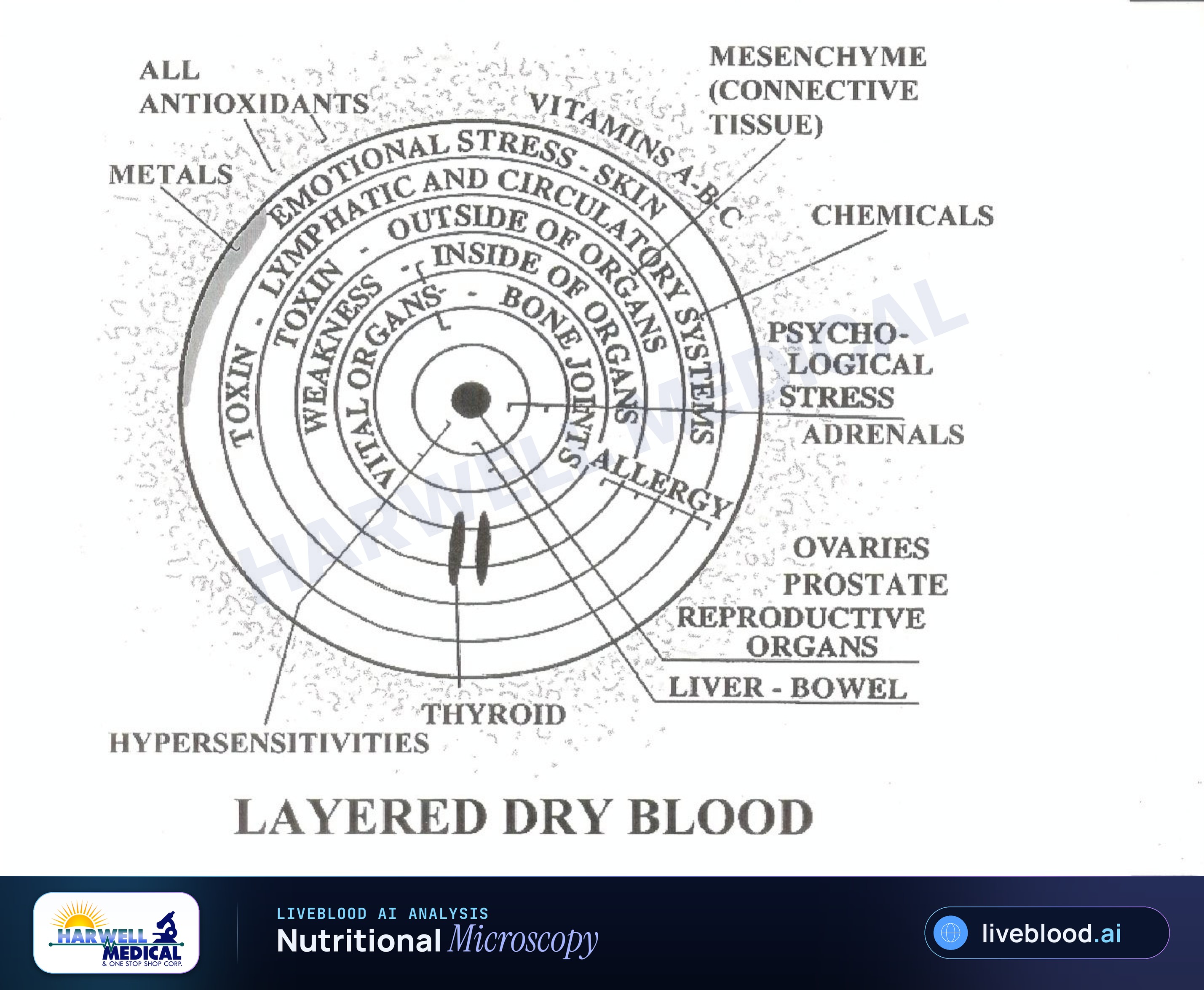
The layered diagram shown above illustrates how different regions of a dried blood sample have been associated with various body systems and environmental influences.
3. Understanding the Layered Blood Pattern Model
The layered model organizes visual observations into multiple concentric zones. Each region corresponds to specific theoretical interpretations discussed within dry blood analysis education.
Outer Layer Influences
The outer layers often focus on external influences that may affect wellness and biological balance, including:
- Environmental toxins
- Chemical exposure
- Heavy metals
- Psychological stress
- Emotional stress
- Nutritional status
Circulatory and Lymphatic Layers
The chart also references observations associated with circulatory and lymphatic systems. Practitioners often use these regions to discuss circulation, detoxification processes, and overall wellness support.
Organ-Related Regions
Inner layers within the model reference areas traditionally associated with:
- Liver and bowel function
- Thyroid activity
- Adrenal function
- Reproductive organs
- Connective tissue health
- Bone and joint systems
These interpretations are typically used within educational wellness frameworks rather than as standalone diagnostic tools.
4. Common Dry Blood Patterns Observed in Microscopy
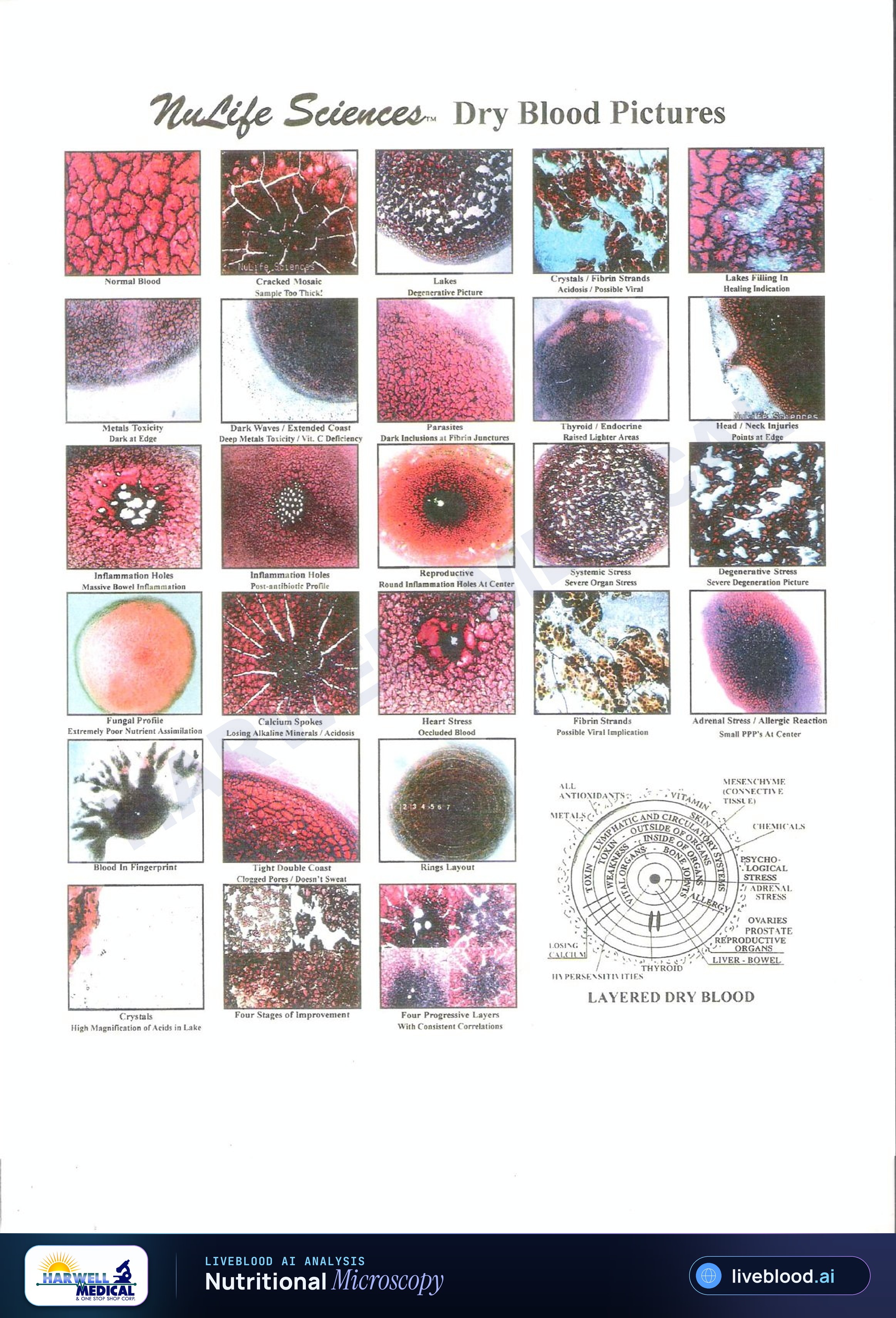
The reference chart displays a variety of dry blood image formations observed tions
Some images display visible fibrin-like strands and web-like formations that are commonly discussed during microscopic observations.
Inflammatory-Looking Patterns
Circular voids, openings, and irregular formations may be described as inflammatory-related observations within dry blood analysis education.
Stress-Associated Patterns
Several images highlight patterns associated with discussions on systemic stress, adrenal responses, and lifestyle-related health challenges.
Nutritional and Mineral Discussions
Practitioners may use certain blood image characteristics when educating clients about hydration, nutrient intake, mineral balance, and antioxidant support.
5. The Role of Artificial Intelligence in Blood Image Analysis
Traditional dry blood analysis relies heavily on visual interpretation. Artificial intelligence is helping improve this process by increasing speed, consistency, and documentation capabilities.
Automated Pattern Recognition
AI systems can rapidly analyze thousands of image features and identify visible blood patterns with greater efficiency.
Digital Reporting
Automated software can organize observations into structured reports that are easier to review and compare over time.
Improved Educational Support
Visual reports generated through AI technology can enhance communication between practitioners and clients during wellness consultations.
Long-Term Image Tracking
Digital image storage enables side-by-side comparisons of blood images collected over weeks, months, or years.
6. How Lifestyle Factors May Influence Blood Health
While blood image observations should always be interpreted within a broader health context, many lifestyle factors contribute to overall blood quality and wellness.
Nutrition
A balanced diet rich in whole foods, vegetables, fruits, and antioxidants helps support healthy biological functions.
Hydration
Water is essential for circulation, nutrient transport, and metabolic processes.
Stress Management
Reducing chronic stress may support overall wellness and improve quality of life.
Regular Movement
Physical activity promotes cardiovascular health and healthy circulation.
Quality Sleep
Restorative sleep remains one of the body's most important recovery mechanisms.
7. How LiveBlood.ai Is Modernizing Blood Imaging
LiveBlood.ai combines artificial intelligence with advanced blood image analysis to help practitioners assess microscopic blood patterns more efficiently.
Key benefits include:
- AI-powered blood image evaluation
- Faster analysis and reporting
- Digital image documentation
- Pattern comparison over time
- Enhanced educational wellness insights
By integrating artificial intelligence with microscopy technologies, LiveBlood.ai helps bridge traditional blood observation methods with modern digital healthcare innovation.
8. Conclusion
Layered dry blood analysis offers a fascinating visual approach to studying blood sample patterns. Historical blood microscopy techniques have inspired ongoing interest in understanding how blood appearance may reflect lifestyle, environmental, and wellness-related factors.
Through advanced AI technologies, LiveBlood.ai is helping modernize blood image analysis by providing more consistent evaluations, streamlined reporting, and enhanced educational insights for practitioners and wellness-focused individuals.
9. Medical Disclaimer
This content is provided for education and general information only. Live blood images and AI-generated observations should not be used independently to diagnose, prevent, or treat a disease. Consult a qualified healthcare professional and use validated laboratory testing for medical concerns.
10. Keep reading
11. Analyze your own blood images
Upload darkfield or brightfield microscopy images and get an 8-section AI report with nutrition guidance and a 7-day meal plan.